ARCBOS
ENGINEERED FOR EXTREME CONDITIONS

What we are building is not a single machine,
but an industrial-grade autonomous capability that can operate reliably over long periods in extreme environments.
Project: SnowBot
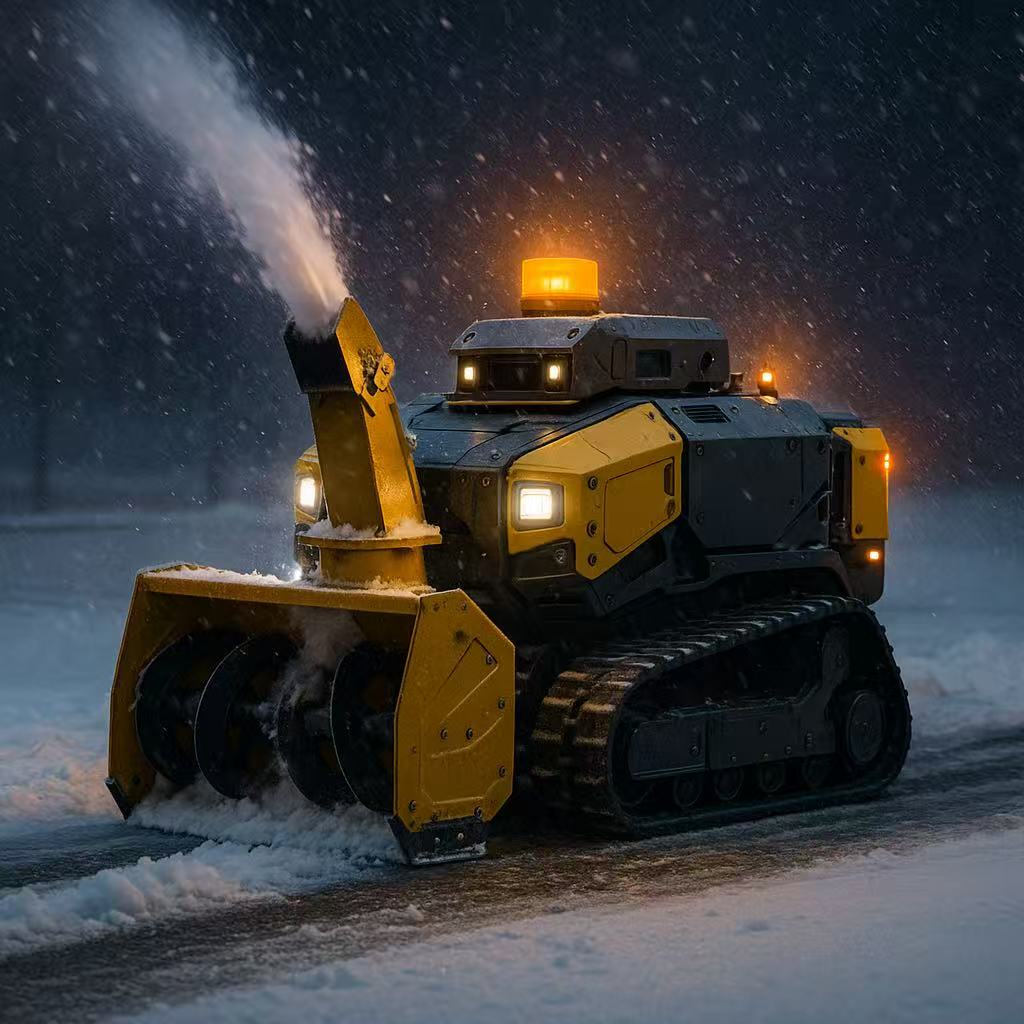
Positioning: All-electric · Autonomous · Industrial-grade extreme-cold snow removal robot system
Target markets: North America, Canada, Europe, and Northern China commercial and industrial facility operations
Financing stage: Pre-A / Engineering prototype validation stage
Raise: RMB 4–6 million
Equity offered: 8%–12%
Investment Summary
The core of this round is not short-term revenue, but engineering transition.

The single objective of this Pre-A round is:
To complete an industrial-grade engineering prototype that is operable, testable, demonstrable, and ready for pilot preparation.

Valuation transition logic:
Concept validation
└─> Engineering validation
    └─> Scenario validation
        └─> Small-batch commercialization
This round is not buying a financial statement. It is buying engineering certainty:
├─ Low-temperature start-up and thermal management capability in extreme cold
├─ Real operating capability of heavy-duty chassis and work execution system
├─ System integration across sensing, control, and execution
├─ Remote monitoring, fault alerting, and degraded operation capability
└─ Qualification for customer demos and winter pilot entry
Problem and Opportunity
Market Nature
Snow removal is not optional consumption. It is essential facility operations.

Typical target customer scenarios:
├─ Data centers
├─ Medical campuses
├─ Logistics parks
├─ Industrial sites
├─ Commercial complexes
├─ Educational institutions
└─ Public facility supporting areas
This market has four common characteristics:
├─ Budgeted
├─ Recurring every year
├─ Non-optional
└─ High consequence of failure
Problems with Existing Solutions
The mainstream approach today is:
Manual dispatch + fuel equipment + experience-driven execution + non-auditable results
Common problems:
├─ Heavy dependence on labor
├─ Difficult night-shift scheduling
├─ Unstable performance under low-temperature conditions
├─ Volatile and unpredictable cost structure
├─ Non-quantifiable work consistency
└─ Lack of remote visibility and process traceability
Dimension
Traditional Approach (Labor + Fuel)
SnowBot (Target State)
Night Operations
Highly dependent on labor scheduling
Autonomous operation
Extreme Weather Capability
Unstable and highly variable
Stable operation in extreme conditions
Operational Consistency
Not measurable
Repeatable and traceable
Long-duration Work
Limited by human fatigue
Sustainable operation
Cost Structure
Volatile
Predictable
Auditability
Nearly none
Full-process records
The market does not lack equipment.
It lacks an industrial-grade autonomous operating system that can run reliably over time in extreme environments.
Opportunity Assessment
This opportunity is valid because:
├─ Demand is real
├─ Spending is mature
├─ Substitution logic is clear
├─ Scenarios are well defined
├─ The technical threshold is high
└─ Once established, the capability has platform expansion value
Why Now
The timing window is created by four overlapping trends:
├─ Labor cost continues to rise
├─ Customers increasingly require auditability
├─ Electric drive, sensing, and autonomy technologies are maturing
└─ North American procurement and pilot cycles are clear
Time
Stage
Content
May
RFP Release
Requirements defined
Jun–Aug
Evaluation
Technical + commercial review
Before Sep
Contract Award
Winning supplier confirmed
Winter
Execution & Review
Service delivery and performance assessment
Key customer concerns:
├─ LOS (level of service)
├─ Response time
├─ Coverage
├─ Auditability
└─ Risk control
Solution
SnowBot is not a single mechanical product.
It is an industrial-grade autonomous system designed for extreme-cold snow removal scenarios.

System objectives:
├─ Start reliably in extreme cold
├─ Operate in complex snow conditions
├─ Be monitored during long-duration operations
├─ Degrade safely when faults occur
└─ Be validated on customer sites
System Composition
SnowBot consists of six core systems:
├─ Extreme-cold operation system
│  ├─ Low-temperature start-up
│  ├─ Battery insulation
│  ├─ Closed-loop thermal management
│  └─ Temperature control for key electronics
│
├─ All-electric drive system
│  ├─ High-torque output
│  ├─ Traction and braking control
│  ├─ Low-temperature power retention
│  └─ Freeze-resistant heavy-duty adaptation
│
├─ Work execution system
│  ├─ Snow pushing / clearing execution
│  ├─ Anti-clogging structure
│  ├─ Parameter matching
│  └─ Modular work interface
│
├─ Sensing and localization system
│  ├─ Multi-source sensing
│  ├─ Non-single-vision dependence
│  ├─ Boundary recognition
│  └─ Low-visibility safety strategy
│
├─ Autonomy control system
│  ├─ Path execution
│  ├─ Priority management
│  ├─ Exception handling
│  └─ Fault tolerance
│
└─ Remote operations and maintenance system
   ├─ Status telemetry
   ├─ Fault alerts
   ├─ OTA capability
   └─ Logging and traceability
What This Round Must Prove
This round is not proving a concept. It is proving the following capabilities:
├─ Completion of a basic snow removal workflow
├─ Stable start-up and short-duration continuous operation in low temperatures
├─ Basic path execution and safe stop capability
├─ Remote status monitoring and key parameter telemetry
└─ Readiness for customer demo or winter pilot pre-validation
Scope of This Stage
To keep milestones clear, this round does not aim for:
├─ Mass production
├─ Full commercial closure
├─ Full-scenario generalized autonomy
├─ Fully unmanned long-term deployment under all weather conditions
└─ Large-scale overseas delivery infrastructure
Engineering Validation Path
Five Core Capabilities to Validate
Validation capability 1: Low-temperature start-up and thermal management
├─ Can the system start in low-temperature environments?
├─ Is there a closed-loop thermal management mechanism?
└─ Is thermal balance controllable over longer operation periods?

Validation capability 2: Traction and chassis mobility
├─ Can traction be maintained on snow and low-adhesion surfaces?
├─ Can the system resist sinkage, slipping, and drift?
└─ Can it operate stably on typical campus or facility roads and slopes?

Validation capability 3: Work execution
├─ Can it handle powder snow, wet snow, and partially compacted snow?
├─ Can blockage risk in the work mechanism be identified and controlled?
└─ Can basic clearing performance be repeated consistently?

Validation capability 4: Sensing and safety
├─ Is there a safety strategy for low visibility, icing, and occlusion?
├─ Can it identify obstacles and enforce boundaries?
└─ Can it stop safely or enter controlled operation when sensing degrades?

Validation capability 5: Remote monitoring and degraded operation
├─ Status telemetry
├─ Logging
├─ Fault alerts
├─ Fail-safe
└─ Fail-degraded
Five Key Engineering Risks and Response Paths
Risk
Impact
Validation Method
Mitigation
Battery degradation in low temperature
Reduced runtime
Cold-start testing
Insulation + preheating + energy management
Wet snow blockage
Interrupted operation
Continuous operation testing
Anti-clogging design + parameter optimization
Track slip
Loss of mobility
Snowfield testing
High torque + traction control
Sensing failure
Safety risk
Blizzard / low-visibility testing
Redundant sensing + degraded mode
Long-duration instability
Downtime risk
Extended runtime testing
Modularity + fault isolation
Market Entry Path
Priority Customer Segments
Initial entry priority:
├─ Tier 1: High-reliability scenarios
│  ├─ Data centers
│  ├─ Medical campuses
│  ├─ Logistics parks
│  └─ Industrial facilities
│
└─ Tier 2: Standardized scenarios
   ├─ Commercial parks
   ├─ Educational institutions
   └─ Standardized property campuses
Common characteristics of the initial target customers:
├─ High demand for night-time response
├─ High consequence of failure
├─ Mature budgets
└─ Strong requirements for reliability and auditability
Initial Validation Funnel
Entry path:
Engineering prototype completed
└─> Pre-winter scenario demo
    └─> Pilot opportunity
        └─> LOI / pilot intent
            └─> Customer validation basis for Series A
Single-site Deployment Logic
Single-site deployment logic:
├─ Small site: 2–3 units
├─ Medium site: 3–6 units
└─ Large site: 6–10 units
Commercial Model and Closure Path
Three commercial models will be validated in the early stage:
├─ Model 1: Equipment sales
│  ├─ For large customers with in-house operations teams
│  └─ Direct payment path
│
├─ Model 2: Leasing / RaaS
│  ├─ Better aligned with service-substitution logic
│  └─ Suitable for customers procuring capability as OPEX
│
└─ Model 3: Embedded cooperation with existing service systems
   ├─ First substitute part of labor OPEX
   └─ Lower the barrier for initial market entry
This round does not force a final commercial model.
It focuses on validating three things:
├─ Who pays
├─ Who accepts delivery
└─ Who bears operational responsibility
Product Roadmap
Phase
Timeline
Core Objective
Output
Phase 1
0–6 months
Prototype completion
Operable engineering prototype
Phase 2
6–12 months
Scenario validation
Failure modes
Phase 3
12–18 months
Series A foundation
LOI + test reports
Platform expansion
Later
Horizontal replication
Mowing / inspection / security
Competitive Barriers
Barrier 1: Coupled threshold of extreme cold + heavy duty + autonomy + long-duration operation
├─ Individual modules can be copied
└─ Simultaneous engineering validity across all systems is difficult to replicate
Barrier 2: Product defined from a facility-operations perspective
├─ This is not a “robot that can move”
└─ It is an industrial-grade system that must complete the task reliably
Barrier 3: Cross-disciplinary integration capability
├─ Mechanical and chassis engineering
├─ Energy and thermal management
├─ Electric drive and control
├─ Sensing and autonomy
├─ Remote O&M
└─ Validation system
Role: Founder / Platform architecture, scenario definition, and overall project control
Responsibilities in this round:
├─ System target definition
├─ Scenario and customer path judgment
├─ Team organization and resource coordination
├─ Financing rhythm and milestone control
└─ Overall project execution
Jifeng Gong
Role: Co-founder / Industrial chain and engineering resource coordination
Responsibilities in this round:
├─ Industrial resource coordination
├─ Supply chain and external engineering support
├─ Engineering input structure and production rhythm planning
└─ Transition preparation from prototype to production
Chao Chen
Role: Partner / Product engineering and full-system implementation
Responsibilities in this round:
├─ Overall engineering implementation
├─ Prototype structure and platform engineering
├─ Conversion from R&D to prototype delivery
├─ Cost and structural optimization
└─ Engineering delivery coordination
Wensheng Zhen
Role: Partner / Control systems and system integration lead
Responsibilities in this round:
├─ Control system architecture and integration
├─ End-to-end chain integration across sensing, execution, and control
├─ Support for system-level testing
├─ Stability and exception-handling strategy coordination
└─ Implementation of full-system operating logic
Engineering Prototype Parameters
Parameter Definition Principles
Parameter framework for this round:
├─ Focused on engineering prototype validation
├─ Bounded by real campus and commercial facility scenarios
├─ Prioritizes “able to work, stable, safe, and demonstrable”
└─ Does not equate this prototype parameter set with final production specifications
Target Application Boundary
Target scenarios in this round:
├─ Snow removal on commercial campus roads, walkways, and plazas
├─ Peripheral areas of high-reliability scenarios such as data centers, medical, and logistics facilities
├─ Small-to-medium and medium standardized sites first
└─ Night-time, low temperature, and continuous operation as core validation conditions
SnowBot engineering prototype parameter framework:
├─ Work capability parameters
│  ├─ Clearing width: industrial-grade single-unit effective clearing width
│  ├─ Operating speed: sufficient for continuous campus-level progression
│  ├─ Operating duration: supports single-cycle continuous operation validation
│  └─ Clearing result: judged by repeatability, demonstrability, and verifiability
│
├─ Environmental adaptation parameters
│  ├─ Low-temperature start-up: designed for extreme-cold operation
│  ├─ Low-temperature operation: closed-loop thermal management
│  ├─ Low-visibility operation: safety strategy in place
│  └─ Complex snow adaptation: covers typical winter conditions
│
├─ Chassis and mobility parameters
│  ├─ Traction capability: operable on snowy low-adhesion surfaces
│  ├─ Anti-sink and anti-slip: coordinated structural and control strategy
│  ├─ Slope capability: suitable for typical campus incline conditions
│  └─ Obstacle traversal: handles curbs, joints, and uneven surfaces
│
├─ Energy and runtime parameters
│  ├─ All-electric drive
│  ├─ Battery thermal management
│  ├─ Low-temperature endurance retention
│  └─ Energy scheduling and safety protection
│
├─ Sensing and autonomy parameters
│  ├─ Multi-source sensing fusion
│  ├─ Non-single-vision dependence
│  ├─ Path execution and boundary control
│  ├─ Obstacle recognition and safe stop
│  └─ Degraded operation logic
│
└─ O&M and safety parameters
   ├─ Status telemetry
   ├─ Fault alerts
   ├─ Fail-safe
   ├─ Fail-degraded
   └─ Remote monitoring and maintenance interface
Investor-facing Parameter Language
Recommended external language without disclosing detailed design values:
├─ Work mode: industrial-grade snow removal for commercial facility operations
├─ Work objects: roads, walkways, and open standardized areas
├─ Temperature target: designed for extreme winter conditions
├─ Drive form: all-electric
├─ Operating mode: autonomy-first with remote monitoring and intervention
├─ Sensing mode: multi-source fusion, not dependent on a single visual condition
├─ Safety logic: supports safe stop and degraded operation
└─ Validation target: an engineering prototype that is demonstrable, testable, and pilot-ready
Scope for Technical Due Diligence
The following items will be reserved for subsequent technical due diligence materials:
├─ Exact vehicle dimensions and weight
├─ Exact battery capacity and detailed thermal strategy
├─ Detailed sensor configuration and mounting layout
├─ Control algorithm structure details
├─ Detailed chassis structural parameters
├─ Detailed work mechanism structure and patent points
└─ BOM, unit cost, and key component lists
Use of Funds
The essence of this round is to buy engineering certainty.
Use of proceeds:
├─ Mechanical chassis and work mechanism development
│  ├─ Chassis platform
│  ├─ Structural part development
│  ├─ Work mechanism design
│  ├─ Prototype machining and assembly
│  └─ Key component procurement
│
├─ Electric drive, energy, and thermal management system
│  ├─ Battery pack and BMS
│  ├─ Electric drive system
│  ├─ Heating and insulation design
│  ├─ Low-temperature operating strategy validation
│  └─ Key component selection and testing
│
├─ Sensing, control, and computing platform
│  ├─ Sensors
│  ├─ Controllers and computing platform
│  ├─ Control system development
│  ├─ Integration and fault-handling logic
│  └─ Remote telemetry system
│
├─ Testing and validation
│  ├─ Environmental tests
│  ├─ Site tests
│  ├─ Winter-condition test preparation
│  ├─ Prototype iteration tests
│  └─ Test data recording and review
│
└─ Team and project execution
   ├─ Core R&D input
   ├─ Engineering coordination
   └─ Basic project management and operations
Milestones and Success Definition
M1: System scheme freeze
├─ Overall architecture determined
├─ Key module boundaries defined
└─ Key component selection completed

M2: Mobility platform operational
├─ Chassis is operable
├─ Basic motion control established
└─ Initial traction and stability validation basis established

M3: Key module integration completed
├─ Work mechanism linked with chassis
├─ Control chain basically integrated
└─ Status telemetry and basic monitoring available

M4: Low-temperature and fault-strategy validation
├─ Core thermal strategy formed
├─ Safe stop and degraded logic validated
└─ Initial failure modes identified

M5: Engineering prototype completed
├─ Operable
├─ Demonstrable
├─ Verifiable
└─ Ready for pre-pilot showcase

M6: Winter validation preparation completed
├─ Test plan defined
├─ Customer demo materials formed
└─ Ready to push pilot or LOI discussions
Stage adjustment principles:
If some advanced autonomy capabilities are delayed, this round will still prioritize preserving:
├─ Operability
├─ Workability
├─ Monitorability
└─ Safe stop capability
Investment Logic of This Round
To judge whether a Pre-A project is investable, five things matter most:
├─ Whether the market is real
├─ Whether spending is mature
├─ Whether the technical path is clear
├─ Whether the team can deliver the prototype
└─ Whether the milestones are verifiable
This round is not about proving infinite future upside.
It is about proving that we can use limited capital to build the first industrial-grade extreme-cold snow removal robot that can truly work.
Preconditions for the Next Round
The next round will be built on:
├─ Engineering prototype completion
├─ Real-world condition validation
├─ Identification of core failure modes
├─ Clear product iteration direction
└─ Initial pilot or LOI basis
Objectives for the next round:
├─ Improve engineering stability
├─ Prepare for small-batch production
├─ Validate overseas deployment scenarios
└─ Build commercial closure
Single-site Economics (Investor Version)
Core Economic Logic
Winter snow removal for commercial and industrial facilities is, by nature,
a recurring, budgeted, non-interruptible operational expense.

Therefore, the economic model is not built around “how much one robot sells for,”
but around “how much existing spending it can replace and how much uncertainty it can reduce.”
Current Cost Structure
After SnowBot
Labor cost
Equipment / leasing cost
Night dispatch cost
Electricity and maintenance
Fuel equipment cost
Remote operations and maintenance
Management cost
Automated management
Risk / service-level cost
More predictable cost
Why Customers Will Be Willing to Pilot
Customers do not buy robots because they “like robots.”
They buy because they have to deal with these persistent pain points:
├─ Difficulty securing stable labor at night
├─ Uncontrollable response during snow events
├─ Difficulty tracking work quality
├─ Pressure from service-level commitments
└─ High and volatile cost of traditional solutions
The core customer value of SnowBot:
├─ Reduce labor dependence
├─ Improve operational predictability
├─ Improve auditability and service-level execution capability
└─ Reduce long-term operational uncertainty
The Right Way to Frame Single-site ROI
Single-site ROI should be built on a conservative basis:
├─ Prioritize high-frequency, high-reliability, night-critical sites
├─ Prioritize scenarios with the greatest labor and dispatch pain
├─ Prioritize standardized areas with stronger substitution efficiency
└─ Prioritize validation value within one winter cycle
Investor-friendly ROI framework:
├─ Inputs
│  ├─ Site area and snow-clearing workload intensity
│  ├─ Current annual labor / service spending
│  ├─ Current equipment and fuel spending
│  ├─ Peak-event dispatch cost
│  └─ Hidden risk and service-level related cost
│
├─ Substitution variables
│  ├─ Share of standardized area covered by SnowBot
│  ├─ Replaceable labor shifts / night-shift workload
│  ├─ Outsourced or temporary dispatch cost reduction
│  └─ Service execution improvement
│
└─ Outputs
   ├─ Annual replaceable OPEX range
   ├─ Recommended unit count per site
   ├─ Payback period range
   └─ Non-financial customer benefits
Scope for Later Economic Modeling Materials
Detailed economic modeling will be further developed once customer samples, pilot conditions, and cooperation models become more defined, including:
├─ Annual labor-cost samples by site
├─ Assumptions on annual service capacity per unit
├─ Recommended deployment density per site
├─ Payback model tables
├─ CAPEX / OPEX model comparison
└─ ROI differences by customer type
Closing
Extreme-cold snow removal is not optional consumption.
It is a recurring, mission-critical, budgeted facility operations task.

What SnowBot aims to solve is not a lightweight robotics problem,
but an engineering systems problem involving extreme cold, heavy-duty operation, continuous execution, monitoring, and maintainability.

If this system is proven, it represents not only entry into a real market,
but also the first engineering cornerstone of ARCBOS in extreme-environment autonomous systems.
ARCBOS
ENGINEERED FOR EXTREME CONDITIONS

Shanghai ARCBOS Systems Ltd